
CCO Leaders Address Rural Health Care at Dorchester Conference
With several key legislative deadlines looming in May, Oregon Republicans gathered April 25-27 for a short break from the hustle and bustle of the State Capitol, joining the 2025 Dorchester Conference at scenic Mt. Hood Resort.
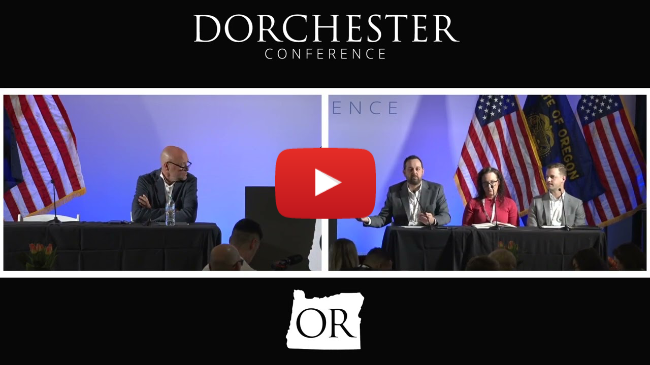
Dorchester is the longest-running political conference west of the Mississippi River, where prominent Republicans have come since 1965 to discuss a variety of important issues. This year included a panel featuring leaders from Coordinated Care Organizations (CCOs) focused on the Oregon Health Plan (OHP) and defending rural health care.
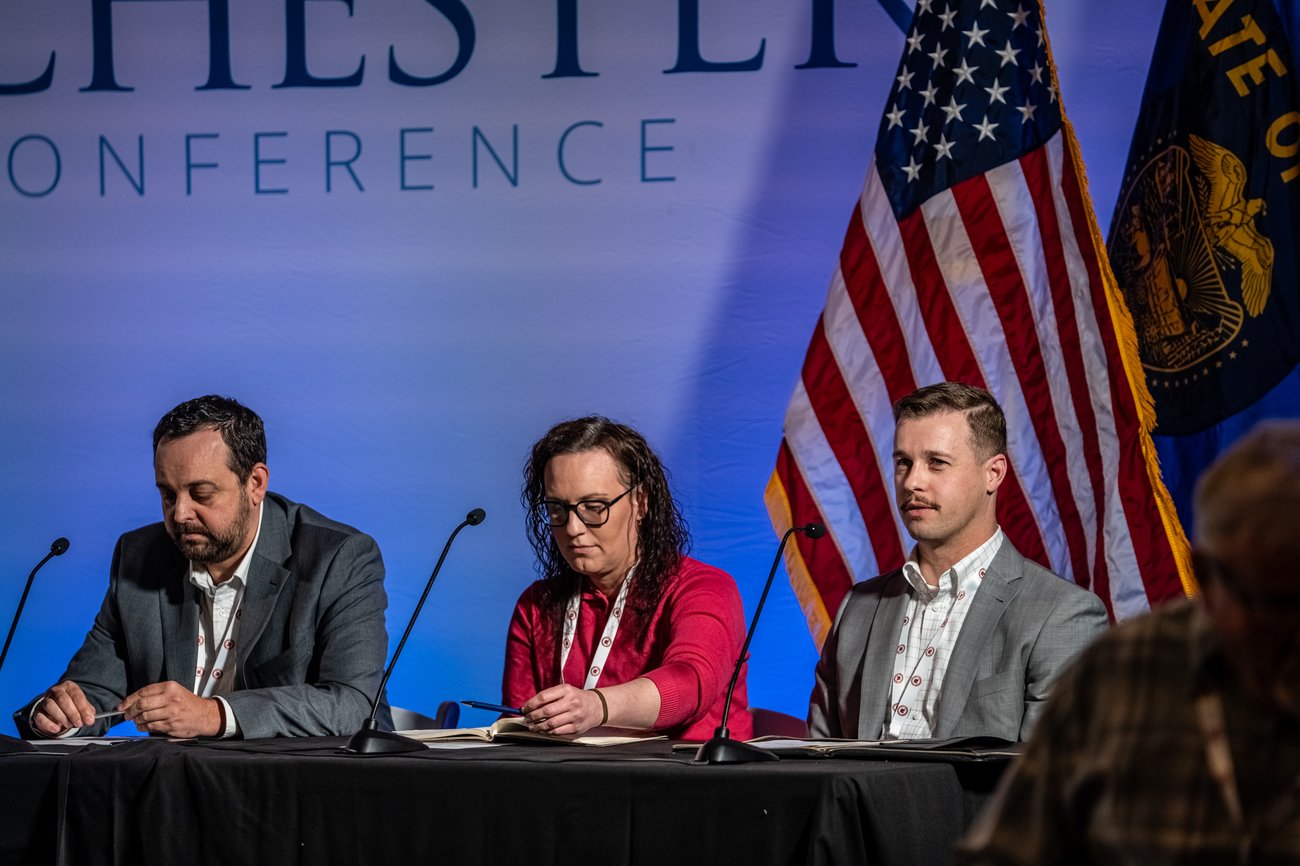
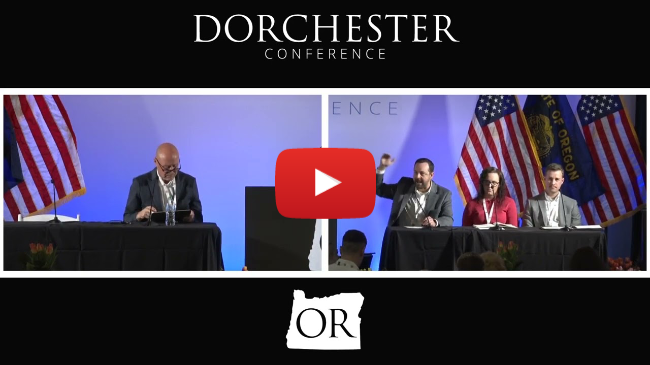
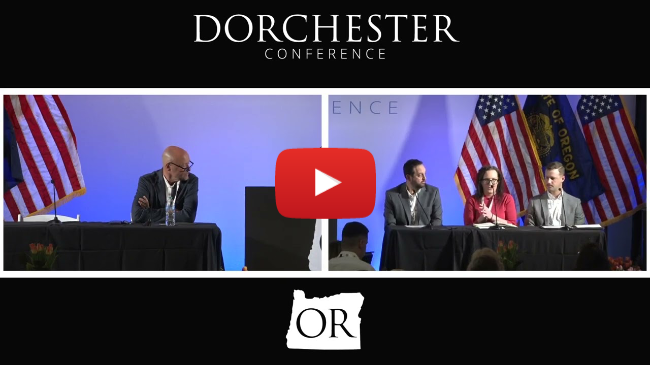
From left, Josh Balloch, of AllCare Health; Courtney Johnston, of Trillium Community Health Plan; and Dan Cushing, of Yamhill Community Care, discuss rural health care at the 2025 Dorchester Conference. (Photo by Zak Stone)
Looking Back
Moderated by Rep. Greg Smith (R-Heppner), the panel started by reviewing how Oregon’s coordinated care model came into existence in 2012.
Dan Cushing, Government Affairs Director for Yamhill Community Care, recalled that around 2010-11, Medicaid costs were rising at an unsustainable rate — about 5.4% year-over-year — outpacing the state’s economic growth and gobbling a bigger portion of the General Fund.
Oregon sought a waiver from the federal government to set up a new Medicaid plan. CCOs were created to deliver benefits region by region across the state, with input and innovation from local providers and community partners.
“We can get really creative and see where members are hitting roadblocks in their care,” Cushing said.
Josh Balloch, Vice President of Health Policy for AllCare Health, said the transformation was born out of necessity due to “cost-shifting,” where Medicaid payments to providers had sunk so low that commercial insurance rates were beginning to skyrocket.
The solution, Balloch said, was to “prioritize very specific services that are more preventive in nature so that we can cover more people and hopefully reduce the amount of sick people, therefore lowering costs.”
 |
Looking Forward
Panelists agreed the coordinated care model has been a success.
Since 2011, the rate of uninsured Oregonians has dropped from nearly 15% to a historic low of 3%, according to the Oregon Health Authority. Data shows CCOs have helped lower spending and improve quality of care, while emphasizing social determinants of health — things like housing, nutrition, and education to promote healthier communities.
But despite these successes, several challenges are on the horizon.
The biggest existential threat, Balloch said, has been efforts by the state to eliminate the Prioritized List of Health Services, which ranks health treatments based on cost and effectiveness to determine whether they are covered by the OHP. Without the Prioritized List, Balloch said it could impact CCOs’ ability to push forward long-term sustainable funding for rural health care providers.
“We’re not just giving everyone everything. We’re actually being thoughtful and intentional about how we can help the most people,” he said. “When you’re looking at government accountability, this is an opportunity for us to demonstrate where Oregon has been a good steward of our state tax dollars and federal tax dollars.”
Cushing said they must also avoid over-regulation stifling communities’ ability to innovate. For example, he said that in just one year, CCOs must provide 200 deliverables to OHA, increasing the administrative burden on providers.
 |
Courtney Johnston, Senior Director of Government Relations for Trillium Community Health Plan, said she believes Oregon is “very much primed” to show the federal government just how effective the coordinated care model has been. However, she cautioned that while OHA requires CCOs to make certain investments in upstream health, the agency is no longer asking whether those are actually making the state healthier.
“We want to find efficiencies to continue to innovate the system so it’s working better for our members,” Johnston said. “We need the state to partner on that so we can show the feds just how effective this can be.”
 |