
CCOs Score Wins in 2025 Legislative Session
In 2024, the Coalition for a Healthy Oregon (COHO) embarked on a series of roundtable discussions with key health policymakers and agency officials to consider improvements to the state’s innovative coordinated care model. Those talks were pivotal in shaping our priorities for the 2025 Legislative Session, which adjourned June 27.
So, how did CCOs fare at the Capitol? While every session has its challenges, COHO was successful in preventing the elimination of Oregon’s Prioritized List of Health Services while making several important changes to CCO contracting with the Oregon Health Authority (OHA).

Throughout the 158-day session, COHO was a constant presence in health care committees, advocating for our providers and our communities. Our roundtables in 2024 laid the foundation for 2025, cultivating strong relationships with House and Senate leaders that allowed us to set the agenda on policy debates.
We look forward to carrying this positive momentum in 2025-27 and beyond, helping CCOs improve health outcomes across the state.
The Prioritized List
From the beginning, COHO was determined to safeguard the Prioritized List — a bedrock element of the Oregon Health Plan that ensures funding is spent on the most effective medical treatments and services.
Oregon Health Authority (OHA) had sought to dismantle the Prioritized List by introducing HB 2917, though that bill quietly died in committee. Instead, lawmakers pivoted to HB 2212, which would have created a task force to evaluate the future of the Prioritized List.
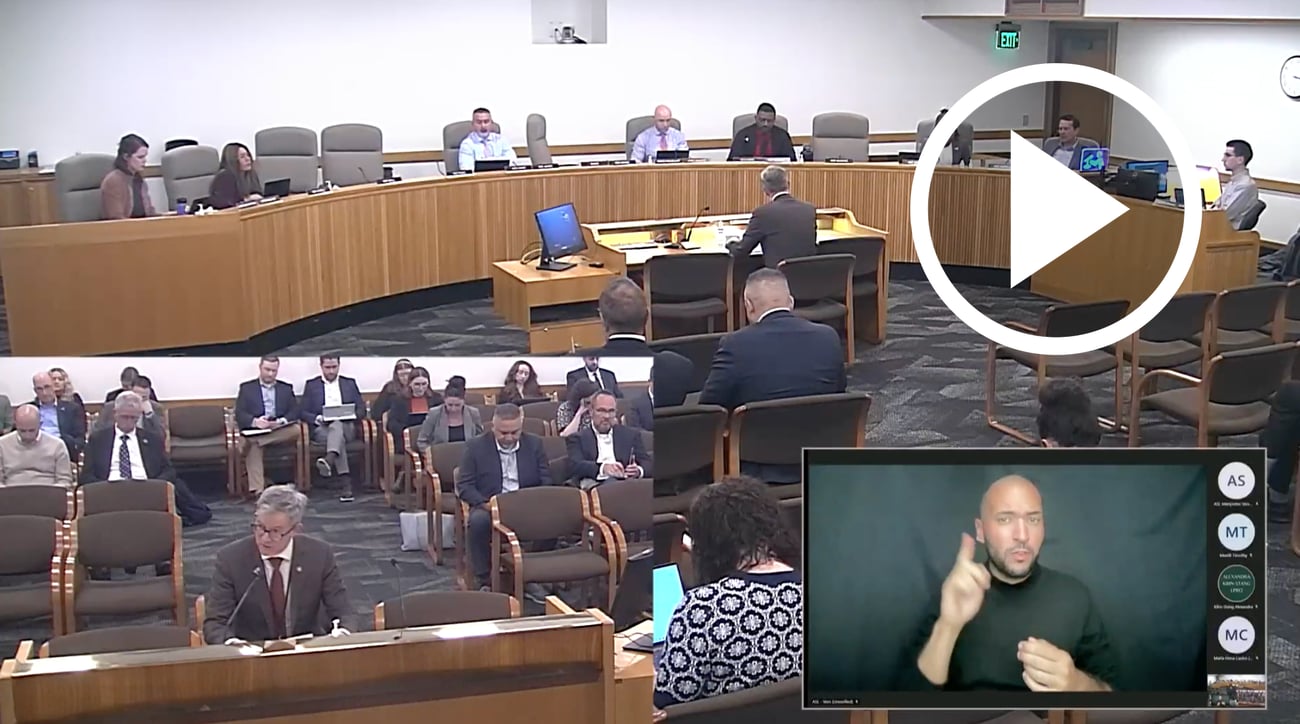
“The goal is to make as minimal changes as necessary,” said Rep. Rob Nosse (D-Portland), chair of the House Behavioral Health and Health Care Committee. “But to be clear, changes will need to be made.”
Watch Rep. Rob Nosse (D-Portland) testify on HB 2212 in the video below.
 |
Despite advancing to Ways and Means, HB 2212 also failed amid a dire May revenue forecast. However, Gov. Tina Kotek, House Speaker Julie Fahey (D-Eugene) and Senate President Rob Wagner (D-Lake Oswego) have agreed to form a work group that will be overseen by OHA.
Oregon now has a chance to thoughtfully reassess the Prioritized List, and preserve our ability to deliver efficient, equitable, and sustainable care for patients.
CCO Contracting
Years of tension between OHA and CCOs over last-minute contract changes also spurred reforms this session aimed at increasing transparency, predictability, and collaboration.
Nosse introduced HB 2209 to establish new criteria for contract amendments, and though it did not pass, the bill prompted OHA to roll out a list of actions addressing major concerns. These include:
- Longer Timelines — New contract requirements will now come with at least 90 days of implementation guidance, giving CCOs more breathing room to adapt.
- More Input — OHA has outlined new opportunities for CCOs to weigh in on major contract changes, including additional “office hours.”
- Clearer Reasoning — Beginning with major changes for 2026, OHA will provide reasoning for each change while identifying them as mandatory or discretionary.
- Implementation Guidance — In the 90-day leadup to contract changes, OHA will provide implementation guidance such as reporting templates and evaluation criteria.
- Legislative Reporting — OHA and CCOs will now deliver a joint annual presentation to lawmakers on contract changes and the process behind them.
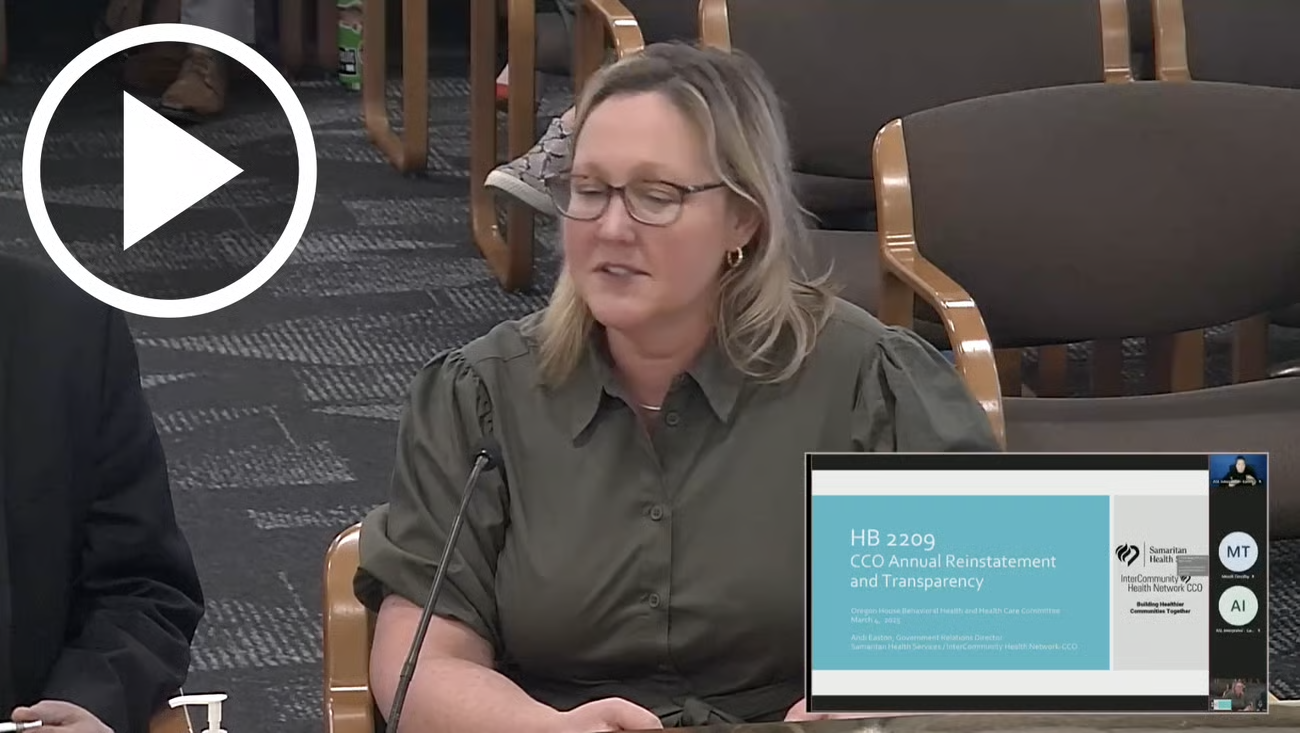
“What we are asking for is that there be more transparency into the process,” said Andi Easton, director of government affairs for Samaritan Health Services and InterCommunity Health Network CCO.
These reforms mark a significant shift toward a more open, transparent, and cooperative relationship between OHA and CCOs, benefitting the entire Medicaid system.
Watch Andi Easton, of IHN-CCO, testify on HB 2209 in the video below.
 |
Contracts Extended
The Legislature passed HB 2205, addressing one of COHO’s top legislative priorities — securing longer contracts for CCOs, providing greater stability to invest in long-term programs that address local health needs.
Previously, CCO contracts ran for a term of five years. The current CCO contract was extended to seven years, from 2020 to 2026. HB 2205 establishes that base contracts going forward will be for a minimum of five years, though they can be longer.
In written testimony submitted March 27 to legislators, OHA Director Dr. Sejal Hathi said that, if the bill were to pass, the agency intends to extend current CCO contracts by another two years.
“We believe this approach balances the request for stability at this time with the imperative for strengthened accountability and continued innovation. Ultimately, it ensures that we will continue to meet the needs of the Oregonians we collectively serve.”
— Dr. Sejal Hathi, OHA Director

Looking Ahead
While the passage of the federal budget bill is set to bring significant cuts to Medicaid, Oregon responded this session by passing the largest budget for OHA in state history, totaling $41.7 billion.
CCOs undoubtedly have their work cut out for them, but COHO’s wins in 2025 have positioned our members for long-term success. We remain committed to working collaboratively with lawmakers to ensure that, despite the federal landscape, we can deliver improved health outcomes with the efficiency and accountability that Oregonians deserve.