State Analysis Shows $15B Impact to Medicaid, SNAP Under Federal Spending Bill
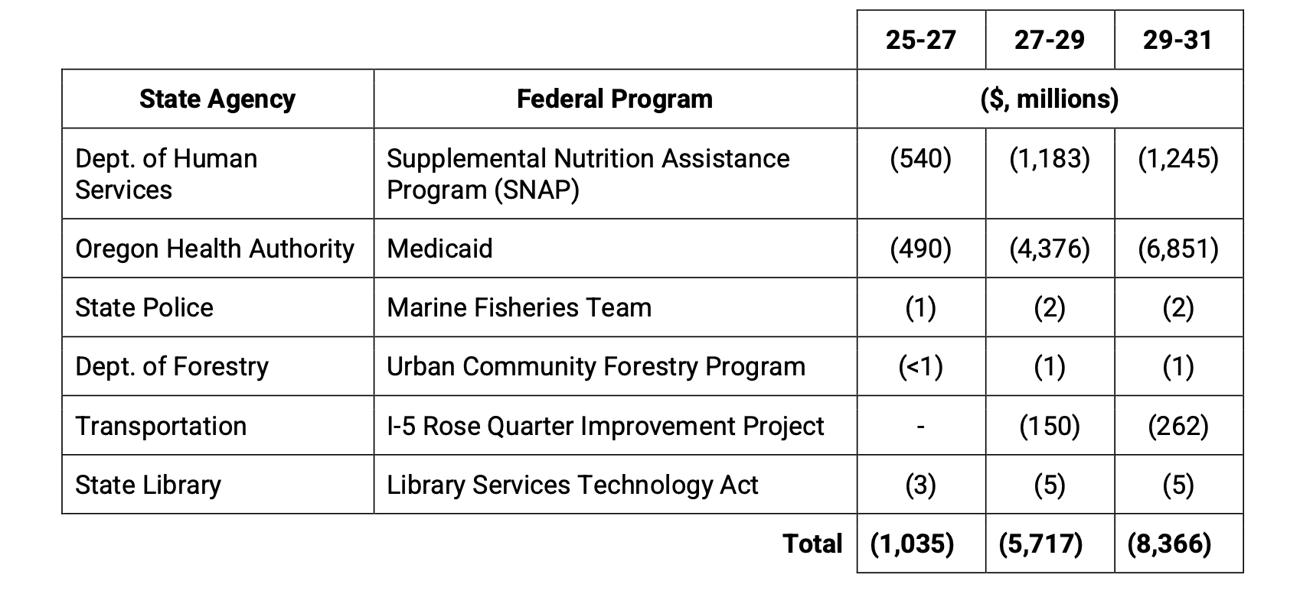
Oregon Gov. Tina Kotek announced the state is projected to lose $15 billion in federal funding for health insurance, food benefits, and other programs under the sweeping tax and spending bill recently passed by congressional Republicans.
A preliminary analysis from Oregon’s Chief Financial Officer shows Medicaid and SNAP — the Supplemental Nutrition Assistance Program — will be hit hardest by the cuts. Kotek says she will convene state lawmakers and community partners to consider possible strategies to reduce these impacts.
“I will continue to hold the line and push back as Oregon values are under threat,” Kotek said in a press release. “I hope Oregonians will stand with me as we fight this together.”
Impacts to Medicaid
While Medicaid program changes have varying implementation dates, the Oregon Health Authority (OHA) anticipates losing up to $11.7 billion through the 2029-31 biennium.
Beginning Jan. 1, 2027, Medicaid enrollees will need to comply with new work requirements in order to stay insured, with limited exemptions for certain members including pregnant women, tribal members, disabled veterans, and medically frail individuals.
Even with those exemptions, between 100,000 and 200,000 Oregonians stand to lose coverage due to challenges demonstrating compliance, according to the analysis. Coverage loss will put further strain on hospitals and providers by increasing uncompensated care for patients in need.
Refugees, asylees, victims of human trafficking, and other lawfully residing non-citizens will also lose eligibility, costing the state more to provide similar coverage under Healthier Oregon.
“OHA noted a potential need for additional staff to manage call centers to help benefit enrollees navigate pending program and benefit application changes, and staff will be needed to begin verifying eligibility of plan holders beginning in 2027,” the report states.
Other short- and long-term impacts outlined in the analysis include:
- Starting in fiscal year 2028, the maximum rate for the Hospital Provider Tax assessed on providers and insurers will be gradually lowered from 6% to 3.5% by fiscal year 2032, which OHA anticipates will result in billions of dollars of lost revenue.
- Beginning in the first quarter of 2027, Oregon will be required to reverify the member eligibility for those who are part of the Affordable Care Act (ACA) expansion population every six months, rather than once every two years. This will affect 580,000-plus enrollees.
- Prohibits use of federal Medicaid dollars for Planned Parenthood, threatening preventive care services for more than 100,000 Oregonians.
“The state’s projections make clear that there are significant challenges ahead for CCOs, our members, providers, and the communities we serve. While the path forward will not be easy, our organizations are steadfast in our commitment to finding innovative solutions that support vulnerable Oregonians. We are ready to work closely with the governor and state leaders on a constructive path forward.”
— Grant Kennon, CEO, Cascade Health Alliance

Impacts to SNAP
The Oregon Department of Human Services, which administers SNAP, estimates it will lose nearly $3 billion in federal funding from 2025-29.
Among the program changes, more than 310,000 adults ages 18-64 with no dependent children under the age of 14 will have to meet new work requirements to maintain eligibility. These include older adults and individuals living in communities with a shortage of job opportunities.
“The exemption of certain individuals from SNAP benefits will likely place additional pressure on the food bank system, as well as other systems of social support throughout Oregon,” the report states. “Several SNAP programs are effectively ending or being curtailed as part of the provisions of H.R. 1. As a result, without additional state support, more Oregonians will experience hunger or reduced access to more nutritional foods.”
COHO will continue to monitor impacts to members from H.R. 1 as detailed federal guidelines for its implementation are released. Our leaders stand ready to work with Gov. Kotek and state leaders to ensure we keep our communities vibrant and healthy going forward.