Federal Medicaid Changes Dominate Discussions at State of Reform
From the opening keynote to the closing plenary, the 2025 Oregon State of Reform Health Policy Conference focused largely on how the state is bracing for significant federal changes to Medicaid in the coming years.
Between budget cuts and new work requirements for Medicaid members set to take effect next year under H.R. 1, the Oregon Health Authority has estimated it could lose up to $11.7 billion through the 2029-31 biennium, while up to 200,000 Oregonians stand to lose coverage.
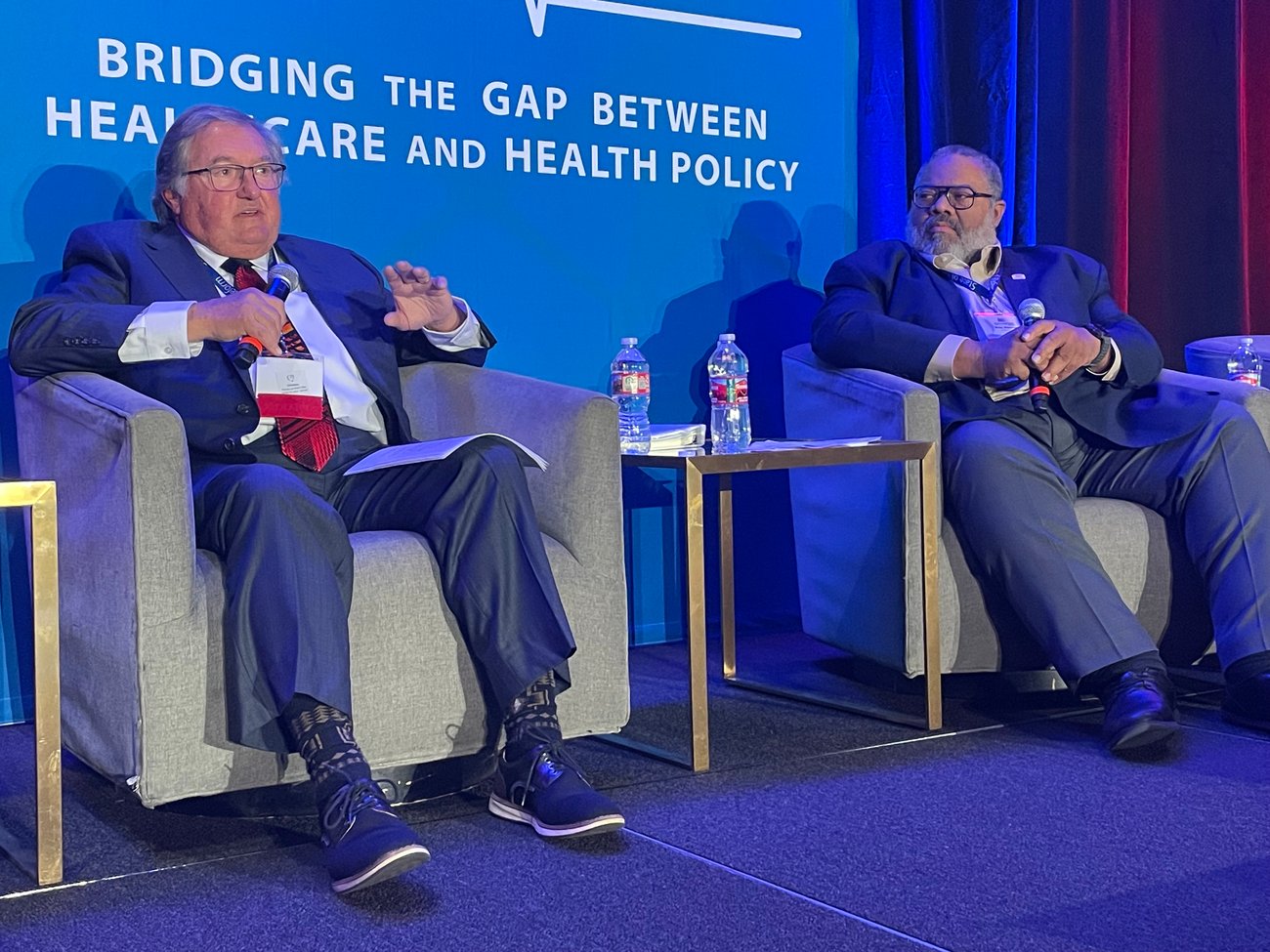
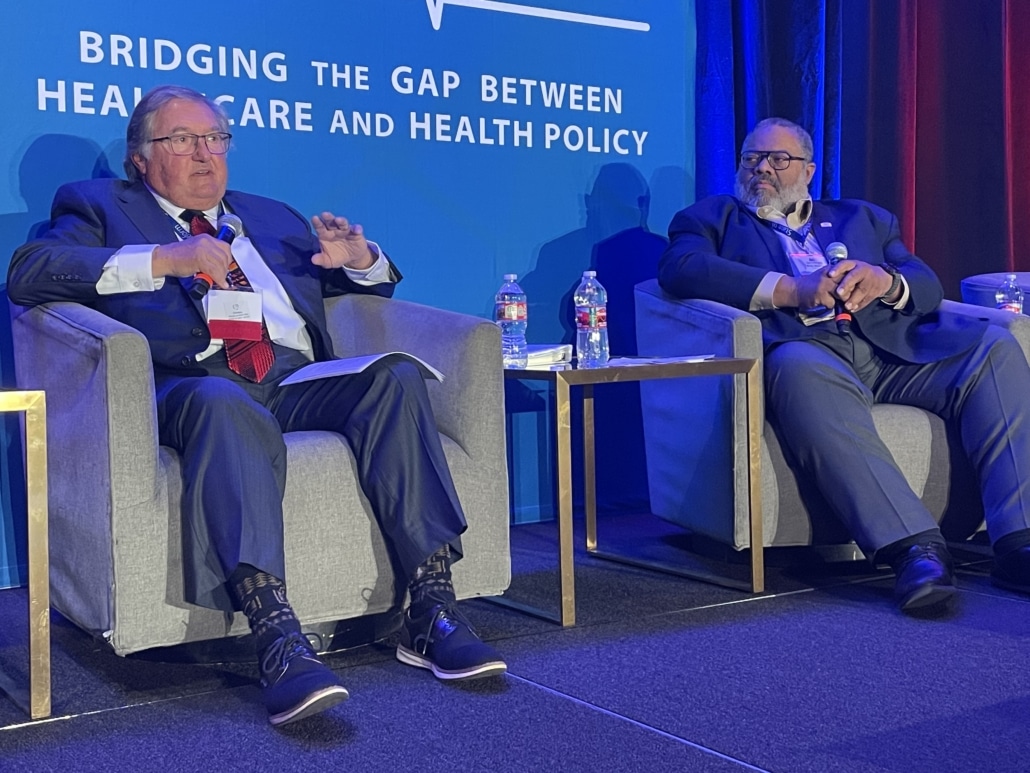
Paul Phillips (left), President of Pac/West Communications, and Eric Hunter, President and CEO of CareOregon, discuss lessons from Oregon’s CCO model during the 2025 Oregon State of Reform Conference.
Despite these challenges, Paul Phillips, President of Pac/West Communications, encouraged leaders to view the federal government’s actions as an opportunity to help CCOs expand and innovate by breaking down regulatory barriers.
“I think we have a strong base to build upon, and we should be very aggressive in how we do that,” Phillips said while discussing the future of Oregon’s coordinated care model. “Together, we can continue to be successful.”
Watch the full presentation, featuring Phillips and CareOregon President and CEO Eric Hunter, by clicking the video below.
 |
Legislators Share Perspectives
State Rep. Cyrus Javadi (D-Tillamook) said health care has become over-politicized and called upon “courageous, brave leaders” to steer the ship. He spoke on a panel exploring ways to advance public health in Oregon.
“Until politicians do the right thing, we will be stuck,” Javadi said.
During a separate panel, Rep. Ed Diehl (R-Stayton), Vice Chair of the House Interim Committee on Health Care, said the Oregon Health Plan (OHP) was already struggling before Congress passed H.R. 1. Diehl said lawmakers must find ways to “right-size” Medicaid going forward, which may include lowering provider costs or reexamining which services the state can afford to cover.
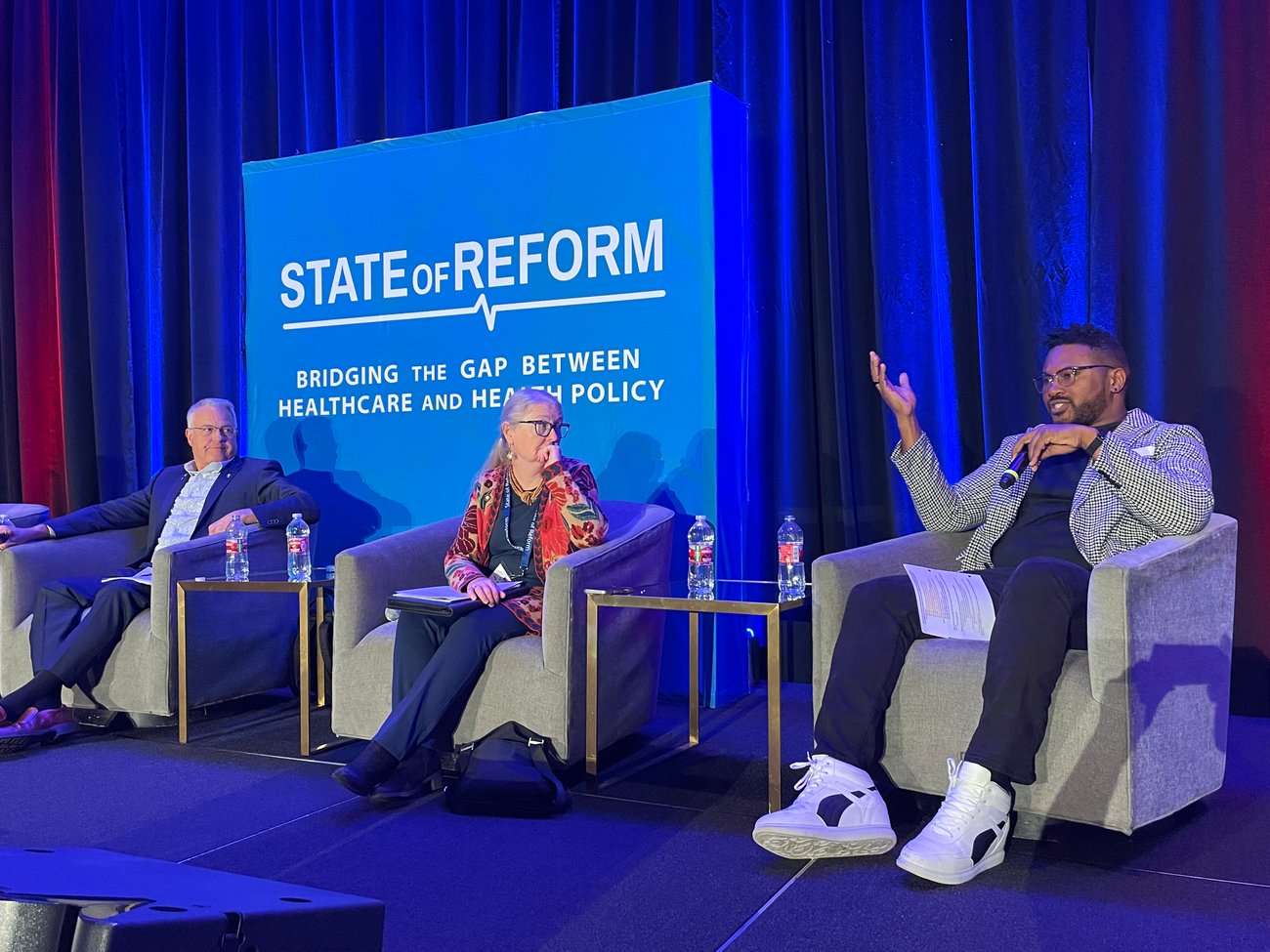
State Representative Travis Nelson (D-Portland) speaks with fellow panelist Rep. Ed Diehl (R-Stayton) on left, and Senator Deb Patterson (D-Salem) center, at the Oregon State of Reform Conference.
Rep. Travis Nelson (D-Portland), a registered nurse and fellow vice chair of the House Interim Health Care Committee, said Oregon faces serious financial challenges. However, the government’s top goal should be ensuring its citizens are safe and healthy, he said.
“When we want to spend money on things as a nation, we find money for it,” Nelson said. “We need to put people first, whether it’s the federal government or state government.”
Watch the full legislator panel by clicking the video below.
 |
Navigating Work Requirements
Vivian Levy, Deputy Medicaid Director for OHA, said it is “very likely” that some Medicaid members will lose coverage due to complications complying with new federal work requirements. The state will also have to reverify members who are part of the ACA expansion population every six months, rather than two years.
Their goal, Levy said, is to minimize impacts as much as possible by making the application process as simple as it can be.
“We are making every effort to define what it is we need and then look for (information technology) tools to let us do that,” Levy said.
What exactly those tools look like won’t be determined until mid-2026, Levy said. Meanwhile, the state will continue to rely on local partners — including CCOs — to keep communities informed and provide guidance.
“CCOs can be a really trusted, effective partner in communication,” Levy said.
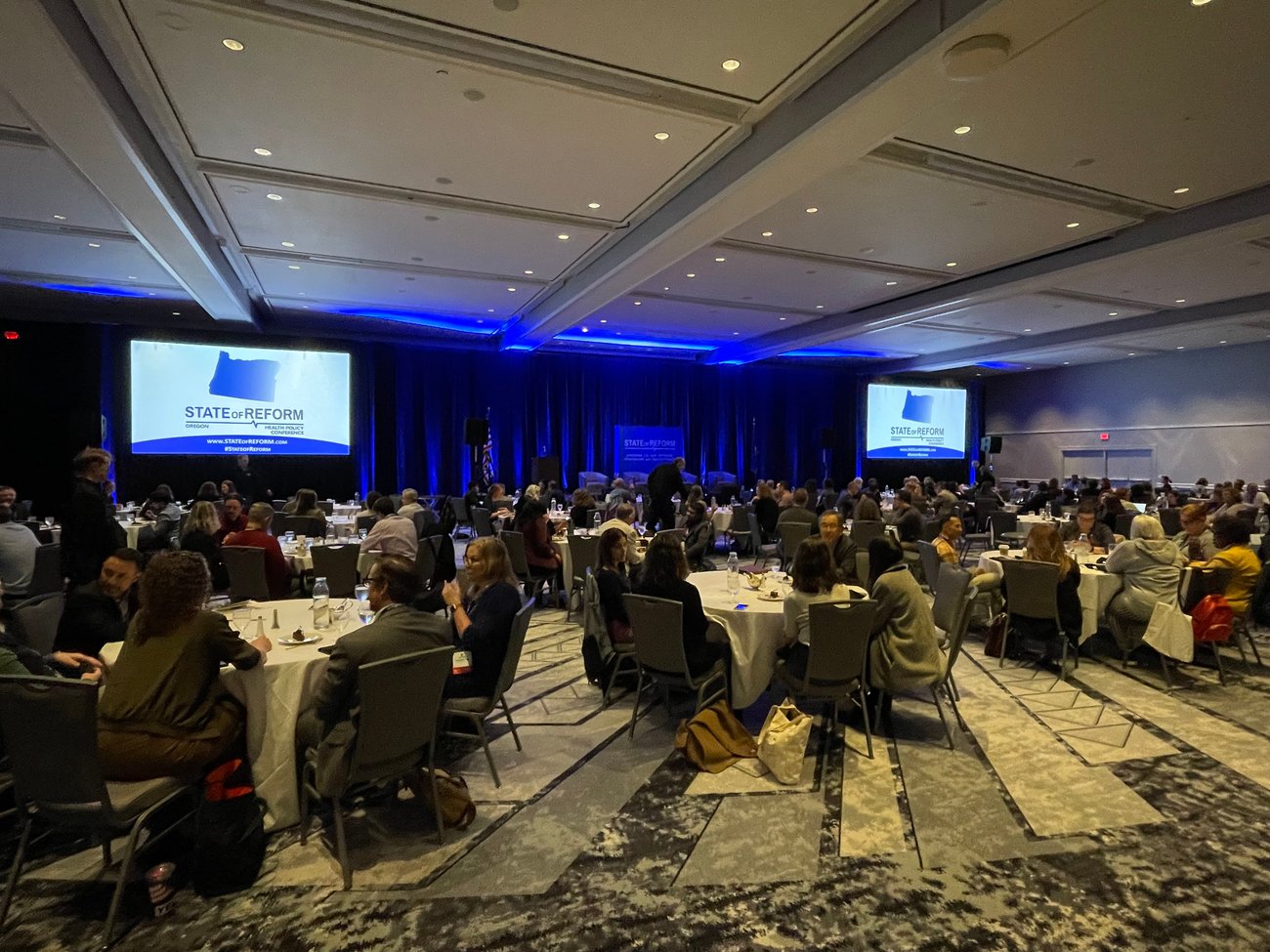
The 2025 Oregon State of Reform Conference was held at the Downtown Hilton in Portland.
Rural Health Transformation
Clare Pierce-Wrobel, Health Policy and Analytics Director for OHA, said the state expects to hear back by Dec. 31 on its Rural Health Transformation Program grant application.
The Centers for Medicare & Medicaid Services (CMS) is allocating $50 billion over five years to all 50 states. If the grant is accepted, Pierce-Wrobel said OHA will hit the ground running on Jan. 1 investing across five initiatives:
- Addressing healthy communities and preventive health.
- Increasing health care workforce recruitment and retention.
- Data and technology.
- Regional collaboration.
- Tribal initiatives.
The first phase will award funding for shovel-ready projects, with a future phase targeting long-term sustainability, Pierce-Wrobel said. “Our team has been working around the clock to ensure that we are submitting a competitive application, and one that has been informed by community input,” she said.

