Coalition for a Healthy Oregon
  • About COHO
    • Access to Health and Social Benefits
    • Improving Quality and Outcomes
    • Local Governance and Stewardship of Dollars
    • Glossary of Key Terms
  • News
  • Contact
  • Menu Menu
  • Link to Facebook
  • Link to Vimeo

CCOs Score Wins in 2025 Legislative Session

July 15, 2025

In 2024, the Coalition for a Healthy Oregon (COHO) embarked on a series of roundtable discussions with key health policymakers and agency officials to consider improvements to the state’s innovative coordinated care model. Those talks were pivotal in shaping our priorities for the 2025 Legislative Session, which adjourned June 27.

So, how did CCOs fare at the Capitol? While every session has its challenges, COHO was successful in preventing the elimination of Oregon’s Prioritized List of Health Services while making several important changes to CCO contracting with the Oregon Health Authority (OHA).

Throughout the 158-day session, COHO was a constant presence in health care committees, advocating for our providers and our communities. Our roundtables in 2024 laid the foundation for 2025, cultivating strong relationships with House and Senate leaders that allowed us to set the agenda on policy debates.

We look forward to carrying this positive momentum in 2025-27 and beyond, helping CCOs improve health outcomes across the state.

The Prioritized List

From the beginning, COHO was determined to safeguard the Prioritized List — a bedrock element of the Oregon Health Plan that ensures funding is spent on the most effective medical treatments and services.

Oregon Health Authority (OHA) had sought to dismantle the Prioritized List by introducing HB 2917, though that bill quietly died in committee. Instead, lawmakers pivoted to HB 2212, which would have created a task force to evaluate the future of the Prioritized List.

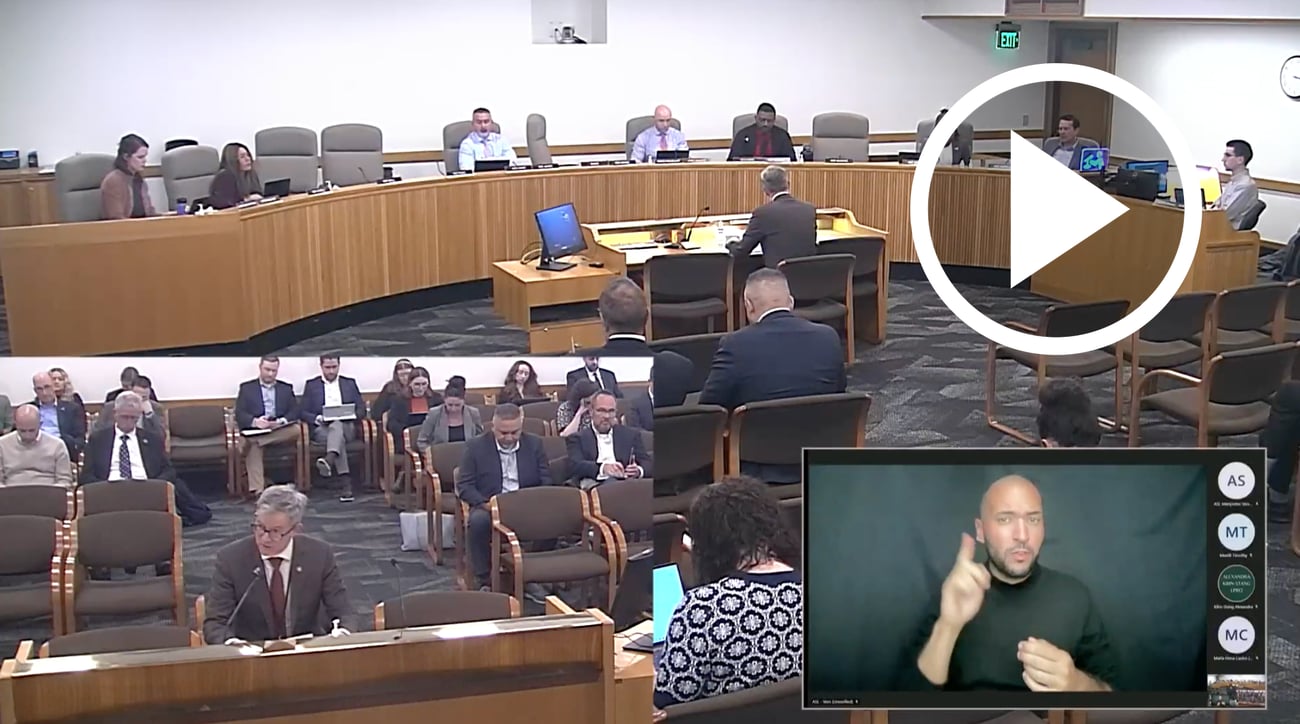
“The goal is to make as minimal changes as necessary,” said Rep. Rob Nosse (D-Portland), chair of the House Behavioral Health and Health Care Committee. “But to be clear, changes will need to be made.”

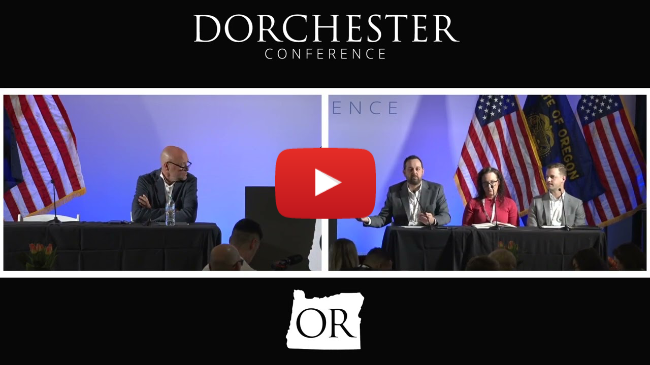
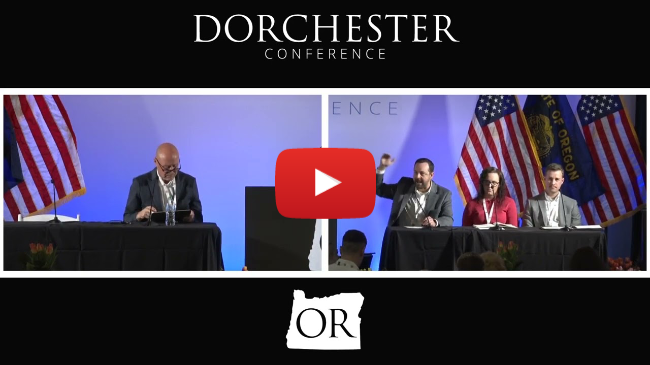
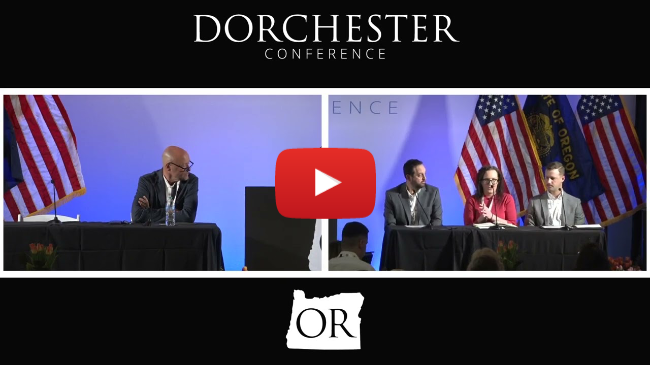
Watch Rep. Rob Nosse (D-Portland) testify on HB 2212 in the video below.

Despite advancing to Ways and Means, HB 2212 also failed amid a dire May revenue forecast. However, Gov. Tina Kotek, House Speaker Julie Fahey (D-Eugene) and Senate President Rob Wagner (D-Lake Oswego) have agreed to form a work group that will be overseen by OHA.

Oregon now has a chance to thoughtfully reassess the Prioritized List, and preserve our ability to deliver efficient, equitable, and sustainable care for patients.

CCO Contracting

Years of tension between OHA and CCOs over last-minute contract changes also spurred reforms this session aimed at increasing transparency, predictability, and collaboration.

Nosse introduced HB 2209 to establish new criteria for contract amendments, and though it did not pass, the bill prompted OHA to roll out a list of actions addressing major concerns. These include:

  • Longer Timelines — New contract requirements will now come with at least 90 days of implementation guidance, giving CCOs more breathing room to adapt.
  • More Input — OHA has outlined new opportunities for CCOs to weigh in on major contract changes, including additional “office hours.”
  • Clearer Reasoning — Beginning with major changes for 2026, OHA will provide reasoning for each change while identifying them as mandatory or discretionary.
  • Implementation Guidance — In the 90-day leadup to contract changes, OHA will provide implementation guidance such as reporting templates and evaluation criteria.
  • Legislative Reporting — OHA and CCOs will now deliver a joint annual presentation to lawmakers on contract changes and the process behind them.

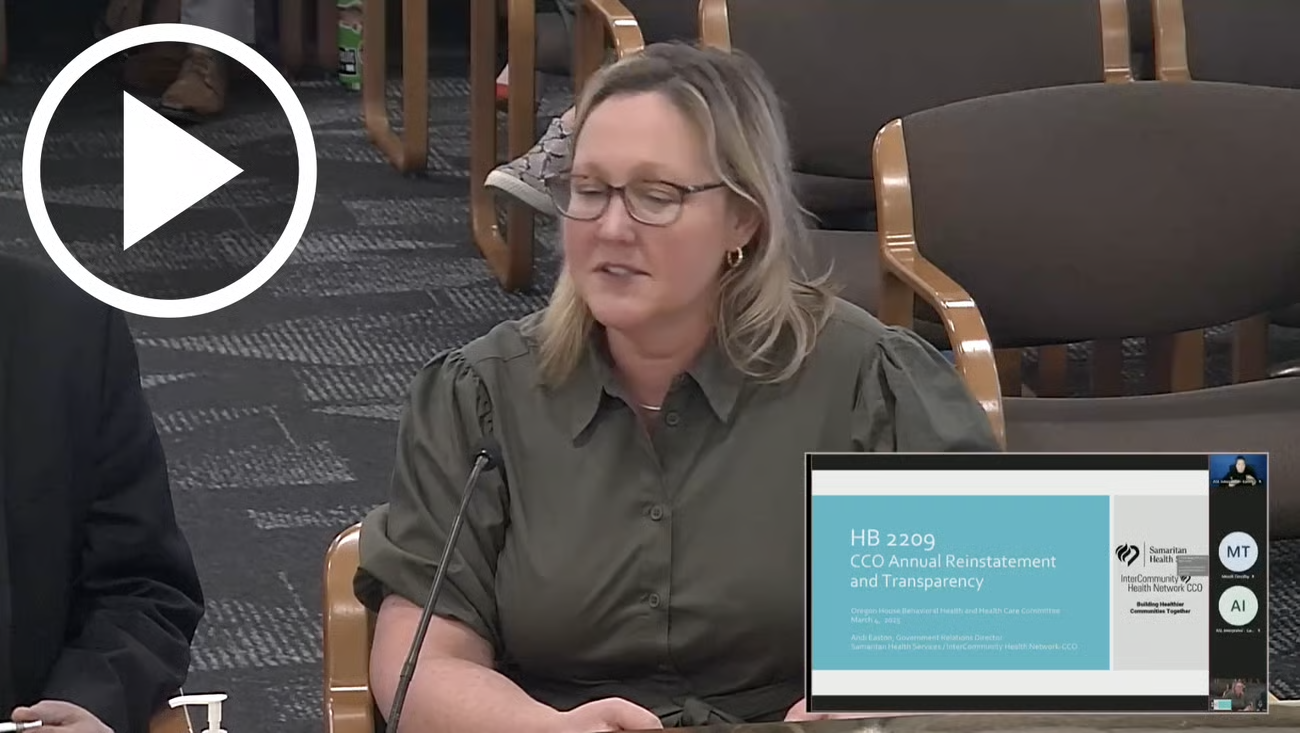
“What we are asking for is that there be more transparency into the process,” said Andi Easton, director of government affairs for Samaritan Health Services and InterCommunity Health Network CCO.

These reforms mark a significant shift toward a more open, transparent, and cooperative relationship between OHA and CCOs, benefitting the entire Medicaid system.

Watch Andi Easton, of IHN-CCO, testify on HB 2209 in the video below.

Contracts Extended

The Legislature passed HB 2205, addressing one of COHO’s top legislative priorities — securing longer contracts for CCOs, providing greater stability to invest in long-term programs that address local health needs.

Previously, CCO contracts ran for a term of five years. The current CCO contract was extended to seven years, from 2020 to 2026. HB 2205 establishes that base contracts going forward will be for a minimum of five years, though they can be longer.

In written testimony submitted March 27 to legislators, OHA Director Dr. Sejal Hathi said that, if the bill were to pass, the agency intends to extend current CCO contracts by another two years.

“We believe this approach balances the request for stability at this time with the imperative for strengthened accountability and continued innovation. Ultimately, it ensures that we will continue to meet the needs of the Oregonians we collectively serve.”

— Dr. Sejal Hathi, OHA Director

Looking Ahead

While the passage of the federal budget bill is set to bring significant cuts to Medicaid, Oregon responded this session by passing the largest budget for OHA in state history, totaling $41.7 billion.

CCOs undoubtedly have their work cut out for them, but COHO’s wins in 2025 have positioned our members for long-term success. We remain committed to working collaboratively with lawmakers to ensure that, despite the federal landscape, we can deliver improved health outcomes with the efficiency and accountability that Oregonians deserve.

https://cohoplans.org/wp-content/uploads/2025/12/Oregon_State_Capitol_1.jpg 909 1200 Coalition for a Healthy Oregon https://cohoplans.org/wp-content/uploads/2024/09/COHO-Logo_COHO-Logo-Horizontal-1030x231-2.png Coalition for a Healthy Oregon2025-07-15 07:00:252025-12-16 14:50:47CCOs Score Wins in 2025 Legislative Session

Protect Vulnerable Oregonians — Don’t Cut Medicaid

June 15, 2025

With just days remaining in the 2025 Oregon Legislative Session, lawmakers are working swiftly to address their remaining priorities ahead of Sine Die no later than June 29. Our members commend efforts to fund the Oregon Health Authority, especially given mounting federal challenges to Medicaid and a less-than-stellar state budget forecast in May.

However, Coordinated Care Organizations (CCOs) remain concerned about a few proposed cuts to OHA that vulnerable Oregonians can ill afford at this juncture. The good news is there’s still time to fix these gaps and avoid jeopardizing critical care for our communities before legislators adjourn.

CCOs Save Money

Firstly, the Governor’s Recommended Budget initially included a one-time cut of $18.6 million to the CCO Quality Incentive Program (QIP). This program gives CCOs the opportunity to earn financial bonuses each year, shared with providers to improve upon a set of health care quality metrics — incentivizing our organizations to pioneer innovations and improvements in patient care.

Combined with federal matching dollars, this actually adds up to a $60 million reduction in payments for frontline providers. We strongly urge legislators to restore this funding, ensuring the highest quality care for patients in both traditional medical services and social determinants of health.

Next, our members are advocating for two additional OHA budget notes that will allow CCOs to meet rising costs and expand access to care:

  • Note 1: Require that legislative allocations for CCO budgets result in a modest 3.4% increase compared to the 2023-25 biennium.
  • Note 2: Ensure that the $30 million from the General Fund approved by the Legislature and matched with $70 million in federal funds for a mid-year 2025 CCO rate adjustment is distributed equitably among CCOs.

Both of these notes are needed to provide CCOs with the resources they need to meet rising costs and a surge in behavioral health utilization. As the need for services increases, now is the time for Oregon to make sure it we can rise to the occasion and deliver the kind of equitable access and services that our communities depend on.

Medicaid is not just a budget line — it is a lifeline for families, seniors, those managing behavioral health challenges, and people with disabilities. Though storm clouds are gathering around Medicaid at the federal level, Oregon has the opportunity to defend our local populations, lead with stability, and prop up the Coordinated Care System as a model for excellence nationwide.

Now is the worst time for Oregon to pull investments from Medicaid amid federal uncertainty. We hope that, with the few days left in session, our leaders will act to avoid damaging cuts that will reverse recent gains in health equity and increase long-term costs.

Protect Medicaid today and keep Oregon families healthy and whole.

https://cohoplans.org/wp-content/uploads/2025/12/coho-square.jpg 1884 1884 Coalition for a Healthy Oregon https://cohoplans.org/wp-content/uploads/2024/09/COHO-Logo_COHO-Logo-Horizontal-1030x231-2.png Coalition for a Healthy Oregon2025-06-15 07:00:532025-12-16 14:51:34Protect Vulnerable Oregonians — Don’t Cut Medicaid

CCO Leaders Address Rural Health Care at Dorchester Conference

May 15, 2025

With several key legislative deadlines looming in May, Oregon Republicans gathered April 25-27 for a short break from the hustle and bustle of the State Capitol, joining the 2025 Dorchester Conference at scenic Mt. Hood Resort.

Dorchester is the longest-running political conference west of the Mississippi River, where prominent Republicans have come since 1965 to discuss a variety of important issues. This year included a panel featuring leaders from Coordinated Care Organizations (CCOs) focused on the Oregon Health Plan (OHP) and defending rural health care.

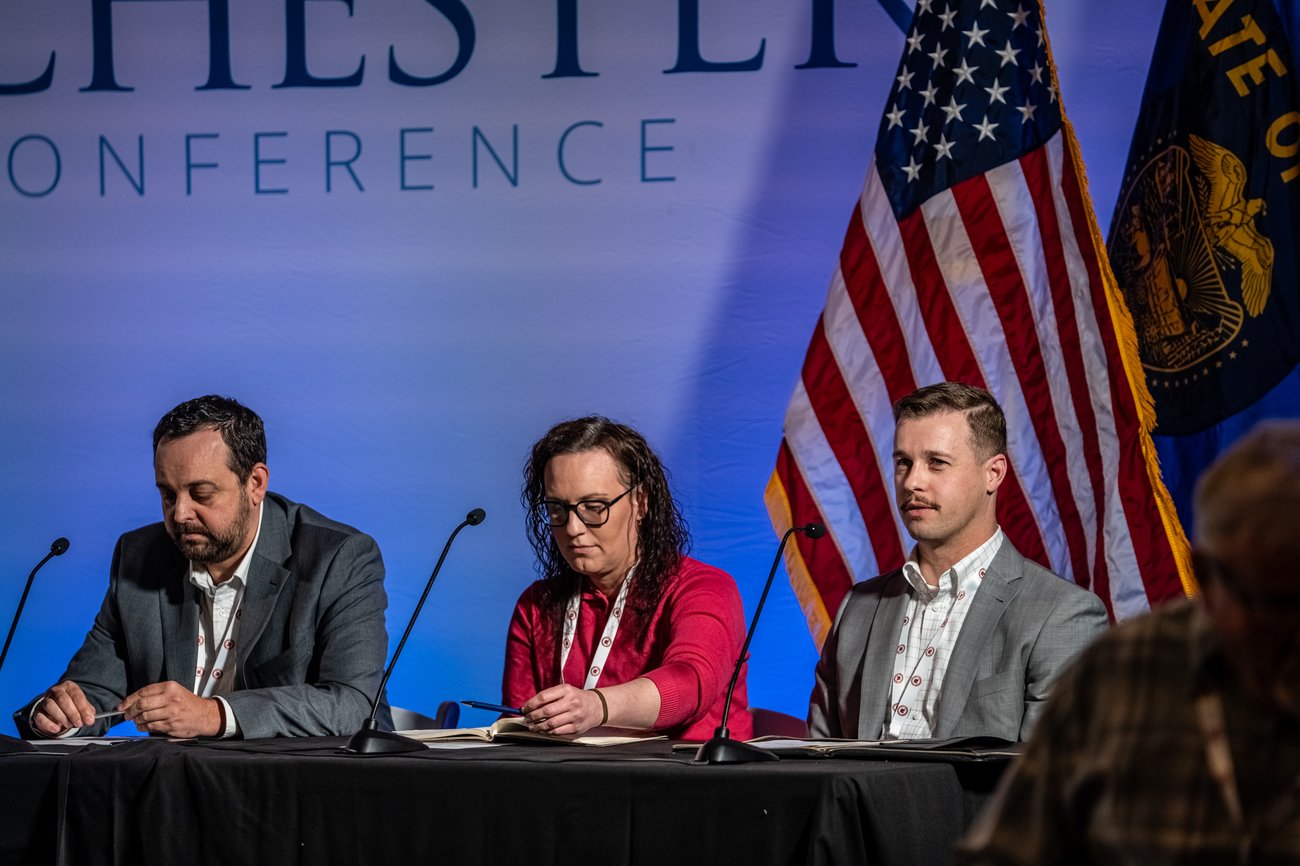
From left, Josh Balloch, of AllCare Health; Courtney Johnston, of Trillium Community Health Plan; and Dan Cushing, of Yamhill Community Care, discuss rural health care at the 2025 Dorchester Conference. (Photo by Zak Stone)

Looking Back

Moderated by Rep. Greg Smith (R-Heppner), the panel started by reviewing how Oregon’s coordinated care model came into existence in 2012.

Dan Cushing, Government Affairs Director for Yamhill Community Care, recalled that around 2010-11, Medicaid costs were rising at an unsustainable rate — about 5.4% year-over-year — outpacing the state’s economic growth and gobbling a bigger portion of the General Fund.

Oregon sought a waiver from the federal government to set up a new Medicaid plan. CCOs were created to deliver benefits region by region across the state, with input and innovation from local providers and community partners.

“We can get really creative and see where members are hitting roadblocks in their care,” Cushing said.

Josh Balloch, Vice President of Health Policy for AllCare Health, said the transformation was born out of necessity due to “cost-shifting,” where Medicaid payments to providers had sunk so low that commercial insurance rates were beginning to skyrocket.

The solution, Balloch said, was to “prioritize very specific services that are more preventive in nature so that we can cover more people and hopefully reduce the amount of sick people, therefore lowering costs.”

What is the Oregon Health Plan?

Looking Forward

Panelists agreed the coordinated care model has been a success.

Since 2011, the rate of uninsured Oregonians has dropped from nearly 15% to a historic low of 3%, according to the Oregon Health Authority. Data shows CCOs have helped lower spending and improve quality of care, while emphasizing social determinants of health — things like housing, nutrition, and education to promote healthier communities.

But despite these successes, several challenges are on the horizon.

The biggest existential threat, Balloch said, has been efforts by the state to eliminate the Prioritized List of Health Services, which ranks health treatments based on cost and effectiveness to determine whether they are covered by the OHP. Without the Prioritized List, Balloch said it could impact CCOs’ ability to push forward long-term sustainable funding for rural health care providers.

“We’re not just giving everyone everything. We’re actually being thoughtful and intentional about how we can help the most people,” he said. “When you’re looking at government accountability, this is an opportunity for us to demonstrate where Oregon has been a good steward of our state tax dollars and federal tax dollars.”

Cushing said they must also avoid over-regulation stifling communities’ ability to innovate. For example, he said that in just one year, CCOs must provide 200 deliverables to OHA, increasing the administrative burden on providers.

Why does Oregon's Prioritized List of Covered Services matter?

Courtney Johnston, Senior Director of Government Relations for Trillium Community Health Plan, said she believes Oregon is “very much primed” to show the federal government just how effective the coordinated care model has been. However, she cautioned that while OHA requires CCOs to make certain investments in upstream health, the agency is no longer asking whether those are actually making the state healthier.

“We want to find efficiencies to continue to innovate the system so it’s working better for our members,” Johnston said. “We need the state to partner on that so we can show the feds just how effective this can be.”

Are we helping Oregonians get healthier?
https://cohoplans.org/wp-content/uploads/2025/12/DorchesterPanel.jpeg 866 1300 Coalition for a Healthy Oregon https://cohoplans.org/wp-content/uploads/2024/09/COHO-Logo_COHO-Logo-Horizontal-1030x231-2.png Coalition for a Healthy Oregon2025-05-15 07:00:032025-12-16 14:52:12CCO Leaders Address Rural Health Care at Dorchester Conference

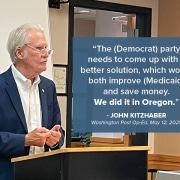
Democrats: Save Medicaid but don’t defend it

May 12, 2025

John Kitzhaber, a former emergency physician, was a three-term Democratic governor of Oregon and author of the Medicaid model discussed in this essay.

As negotiations continue on the budget bill President Donald Trump wants Congress to pass, Medicaid is squarely in the crosshairs. The Congressional Budget Office estimates Medicaid could lose up to $880 billion over the next 10 years, and that millions of low-income Americans would lose their health coverage.

The Democratic Party has understandably reacted with outrage. But its “no cuts or reforms to Medicaid, period” mantra creates a false choice between cuts and defending the status quo. On one hand, any action that reduces funding for Medicaid, without also making structural changes to the program, will in fact cause millions to lose coverage. That is unacceptable — and will increase costs in the long run for most Americans. People without insurance tend to access care through emergency rooms, where federal law requires they be seen and treated. That uncompensated cost is reflected in higher premiums for those who have health insurance.

Read the full article at The Washington Post

https://cohoplans.org/wp-content/uploads/2025/05/Kitzhaber-Photo.jpg 600 800 Coalition for a Healthy Oregon https://cohoplans.org/wp-content/uploads/2024/09/COHO-Logo_COHO-Logo-Horizontal-1030x231-2.png Coalition for a Healthy Oregon2025-05-12 16:18:492025-05-12 16:20:01Democrats: Save Medicaid but don’t defend it

Oregon AG Rayfield Provides Outlook for CCOs Amid Federal Uncertainty

April 2, 2025

Imagine for a moment that you, like 1.4 million Oregonians, are enrolled in the Oregon Health Plan. You have a chronic health condition — for example, type 1 diabetes — requiring you to regularly test your blood sugar and take insulin daily.

Read more
https://cohoplans.org/wp-content/uploads/2025/04/rayfield.png 1708 2560 Coalition for a Healthy Oregon https://cohoplans.org/wp-content/uploads/2024/09/COHO-Logo_COHO-Logo-Horizontal-1030x231-2.png Coalition for a Healthy Oregon2025-04-02 09:33:542025-12-16 09:14:22Oregon AG Rayfield Provides Outlook for CCOs Amid Federal Uncertainty

Why We Must Prioritize the Prioritized List

March 11, 2025

Imagine for a moment that you, like 1.4 million Oregonians, are enrolled in the Oregon Health Plan. You have a chronic health condition — for example, type 1 diabetes — requiring you to regularly test your blood sugar and take insulin daily.

Read more
https://cohoplans.org/wp-content/uploads/2025/03/706389fd-2b04-4e13-9d7e-703a42848fa8.jpg 949 1300 Coalition for a Healthy Oregon https://cohoplans.org/wp-content/uploads/2024/09/COHO-Logo_COHO-Logo-Horizontal-1030x231-2.png Coalition for a Healthy Oregon2025-03-11 13:40:512025-12-16 09:17:29Why We Must Prioritize the Prioritized List

A Foundation of Collaboration

January 15, 2025

Heading into the 2025 Legislative Session, Coalition for a Healthy Oregon (COHO) is targeting several priorities to sustain and improve Oregon’s coordinated care model.

Read more
https://cohoplans.org/wp-content/uploads/2025/01/Kitz.jpeg.png 1920 2560 Coalition for a Healthy Oregon https://cohoplans.org/wp-content/uploads/2024/09/COHO-Logo_COHO-Logo-Horizontal-1030x231-2.png Coalition for a Healthy Oregon2025-01-15 15:19:052025-12-16 09:18:53A Foundation of Collaboration

Oregon CCOs Look Ahead to 2025 and Beyond

December 18, 2024

After 12 years of creating a better health care experience for Oregonians — including better access, better outcomes, and lower costs — Seamus McCarthy can say with confidence that the state’s coordinated care (CCO) model has been nothing short of a success.

Read more
https://cohoplans.org/wp-content/uploads/2024/12/IMG_4179-scaled.jpg 1920 2560 Coalition for a Healthy Oregon https://cohoplans.org/wp-content/uploads/2024/09/COHO-Logo_COHO-Logo-Horizontal-1030x231-2.png Coalition for a Healthy Oregon2024-12-18 13:05:422025-12-16 09:20:26Oregon CCOs Look Ahead to 2025 and Beyond

Grounded in Equity

November 1, 2024

A bright and inviting atmosphere greets patients as they enter the new InterCommunity Health Clinic in Albany, which officially opened its doors on Oct. 28.

Read more
https://cohoplans.org/wp-content/uploads/2025/01/Clinic1.png 626 903 Coalition for a Healthy Oregon https://cohoplans.org/wp-content/uploads/2024/09/COHO-Logo_COHO-Logo-Horizontal-1030x231-2.png Coalition for a Healthy Oregon2024-11-01 09:24:402025-01-15 15:37:07Grounded in Equity

Investing in the First 1,000 Days of Life

September 8, 2024

CCOs strategize on improving care during pregnancy and infancy

If Oregon’s coordinated care model was designed in part to invest upstream in healthy communities, then it doesn’t get any more upstream than early childhood and maternal well-being.

State health officials, lawmakers, and directors of coordinated care organizations (CCOs) gathered Aug. 14 in Salem for a roundtable discussion focused on improving quality of care for Oregonians. The focus was specifically on mental health, nutrition, and housing services for pregnant women, mothers and young children to improve intergenerational health outcomes.

“Research shows that investment during the first 1,000 days of life has a monumental impact,” said Seamus McCarthy, President and CEO of Yamhill Community Care. “We can build on the success of the coordinated care model by investing more in the first 1,000 days of life, and take Oregon to the next level in health care transformation and innovation.”

According to the Centers for Disease Control and Prevention, the U.S. infant mortality rate rose 3% from 5.4 deaths per 1,000 live births in 2021 to 5.6 deaths per 1,000 live births in 2022. The rate was disproportionately high for Black infants, at 10.9 deaths per 1,000 live births; Native Hawaiian/Pacific Islanders, at 8.5 deaths per 1,000 live births; and American Indian/Native Alaskan, at 9.06 deaths per 1,000 live births.

Meanwhile, the mortality rate for mothers across the U.S. nearly doubled between 2014 and 2021, reaching as high as 32.9 deaths per 1,000 live births. That includes nearly 50 deaths per 1,000 live births for Black women.

The goal of the roundtable, sponsored by the Coalition for a Healthy Oregon (COHO), was to brainstorm ways that Oregon CCOs can leverage their resources and community partnerships to better care for moms and kids.

‘Crucible of Toxic Distress’

Former Gov. John Kitzhaber, who was instrumental in the creation of the coordinated care model in 2012, spoke about challenges for families seeking health care. Sometimes they are economic, he said. Sometimes they are due to an overly complex bureaucracy, or cultural differences like a language barrier that inhibit access.

Childhood poverty is especially insidious, Kitzhaber said. He said families struggling every day with economic insecurity live in a “crucible of toxic distress.”

“Therefore, I think the first pillar of our innovation strategy here is to remove the financial barriers to access either by developing continuous eligibility with programs and services and supports that are funded by public entities like the state government, or by directly providing families with the financial support they need to secure these programs,” Kitzhaber said.

‘Momnibus’ Bill in Development for 2025

State Rep. Lisa Reynolds (D-Beaverton), a pediatrician for over 30 years, said her number one goal is to reduce childhood poverty in Oregon by half over the next five years.

“If we can help families meet their basic needs, then a lot of (good) flows from that,” Reynolds said. “And if we don’t, almost nothing else matters, right?”

Reynolds, who serves as chair of the House Committee on Early Childhood and Human Services, outlined four core areas as part of the 2025 “Momnibus” bill to improve early childhood and maternal health:

  • Safe, stable housing during pregnancy in the first year postpartum.
  • Basic income for eligible pregnant and postpartum individuals.
  • Access to care for mental health and substance use disorders.
  • Expanding and diversifying the perinatal workforce, such as community health workers and doulas.

“I really do think we have the power to drastically reduce child poverty and improve Oregon’s health and well-being,” she said.

Best Practices, Bridging Gaps

The second half of the roundtable featured discussion among the group about best practices, key partnerships, and potential new innovations to bridge gaps in care.

Dr. Jeanne Savage, Chief Medical Officer at Trillium Community Health Plan, said she sees the most successful initiatives generated at the community level, such as the Healthy Births Initiative serving Black families in Multnomah County.

“How do we continue to support those organizations that are working within populations suffering the most?” Savage asked. “It has to be driven by the local community and their input … Your project is only as good as who starts it, and who informs you.”

Savage said Oregon CCOs “need to be comfortable with failure” in order to eventually build upon successful partnerships and programs in the long-term.

Lisa Harnisch, Executive Director of the Marion & Polk Early Learning Hub, said organizations should focus on better utilizing partnerships to better connect with families who might not otherwise know how or where to access health care.

“Families don’t know where to go to get resources. They feel so isolated,” Harnisch said. “That navigation piece I know is something we are working on building out.”

Kathleen Nolan, Regional Vice President for Oregon and Washington with Health Management Associates, moderated the roundtable. She said Oregon has always been known as a hub for innovation, “but innovation takes renewal.” These conversations, she said, are meant to keep the coordinated care model on the cutting edge of success.

“We’ve got to do something,” Nolan said. “There’s a lot of great ideas out there. I’m sure there’s more to come.”

https://cohoplans.org/wp-content/uploads/2024/09/coho-square.jpg 1884 1884 Coalition for a Healthy Oregon https://cohoplans.org/wp-content/uploads/2024/09/COHO-Logo_COHO-Logo-Horizontal-1030x231-2.png Coalition for a Healthy Oregon2024-09-08 10:12:382024-10-16 10:17:00Investing in the First 1,000 Days of Life
Page 2 of 41234
Search Search

Recent Posts

  • CHA Announces Funding for Klamath Community College Childhood Learning Center
  • AllCare Health Creates Safe Space to Quit Tobacco
  • McKenzie-Willamette Medical Center in Springfield Joins Trillium Network
  • Prioritized List Makes the Oregon Health Plan Work
  • Yamhill Community Care Celebrates 12 Years of 100% or Greater Quality Pool Earnings

Recent Comments

    Archives

    • June 2026
    • April 2026
    • February 2026
    • January 2026
    • December 2025
    • November 2025
    • October 2025
    • September 2025
    • August 2025
    • July 2025
    • June 2025
    • May 2025
    • April 2025
    • March 2025
    • January 2025
    • December 2024
    • November 2024
    • October 2024
    • September 2024
    • August 2024
    • May 2024
    • April 2024
    • February 2024
    • November 2023
    • December 2022
    • October 2022
    • September 2022
    • June 2022
    • November 2021
    • June 2021
    • August 2020
    • July 2020
    • June 2020
    • May 2020
    • April 2020
    • March 2020
    • April 2017
    • March 2017
    • December 2016
    • November 2016

    Categories

    • Advanced Health
    • AllCare Health
    • Cascade Health Alliance
    • COVID-19
    • General CCOs Story
    • Trillium Community Health Plan
    • Umpqua Health Alliance
    • Videos
    • Yamhill Community Care

    Meta

    • Log in
    • Entries feed
    • Comments feed
    • WordPress.org

    Privacy Policy  |  Partner Links

    © Copyright - Coalition for a Healthy Oregon - Enfold WordPress Theme by Kriesi
    Scroll to top Scroll to top Scroll to top

    Sign up for our newsletter!